The project, coordinated by the onTech Innovation cluster, concludes its second phase with significant technological advances that mark a turning point in the field of urban pest control.
Granada, June 29, 2025
Funded by the Ministry of Industry and Tourism through the AEI program, with a grant of 399,851 euros, the Ecopest II project pursues an ambitious goal: to reduce the use of chemical products in urban pest control, transforming environmental health in cities with more effective, safe and environmentally friendly solutions.
During this second stage, the multidisciplinary consortium formed by Athisa Medioambiente, Nazaríes Intelligenia, Cactus, Fundación Medina, BIOGA and onTech Innovation has worked on three key areas: the use of smart technology for rodent monitoring, the creation of more sustainable biocides and effective biopesticides against mosquitoes.
The use of smart technology for rodent monitoring:
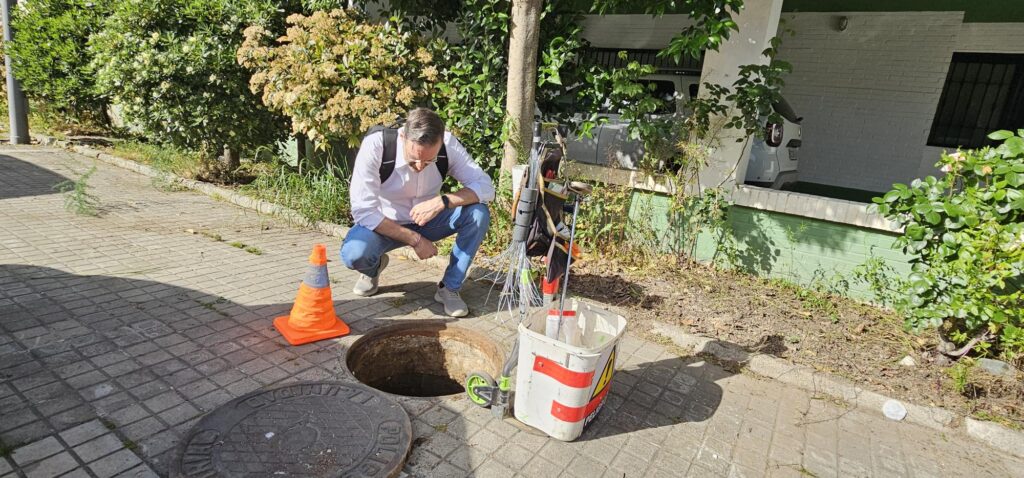
An autonomous computer vision system capable of detecting, marking, and generating alerts about the presence of rodents in urban infrastructure such as sewers has been validated in a real-world environment. The system, based on sensors and local analysis algorithms integrated into a Raspberry Pi, has proven to be accurate, efficient, and energy-efficient, even under adverse conditions. Its ability to generate reliable metrics on rodent activity and passage frequency allows for the adoption of evidence-based control strategies and reduces the unnecessary application of biocides. Additionally, a modular IoT platform has been developed for data management and visualization, featuring a scalable architecture, secure encryption, and early warning functionalities.
New, more sustainable biocidal formulations
New rodenticide baits have been developed with natural preservatives and attractants, maintaining good palatability and allowing the identification of key variables to improve their durability. In cockroach baits, the solid format showed good performance under demanding conditions, outperforming the gel in stability. The studies highlight the potential for optimizing formulations and designs adapted to the urban environment.
Effective biopesticides against mosquitoes
In vivo trials with selected microbial extracts in phase I of the project have demonstrated remarkable efficacy against larvae and adults of the Asian tiger mosquito (Aedes albopictus), with several extracts achieving over 30% adult mortality and three times the efficacy of the control against larvae. All of this with a low environmental footprint compared to other conventional insecticides.
The results of this phase position ECOPEST as an innovative project that combines biotechnology, sensors, artificial intelligence, and environmental health. Although there are still technical challenges to overcome—such as improving the resistance of baits in harsh environments—significant progress has been made, confirming that these technologies can now be applied to pest control plans in cities, industries, and public spaces.
The collaborative and multidisciplinary approach of the project provides a solid foundation for creating new solutions that are safer, smarter, and more environmentally friendly.